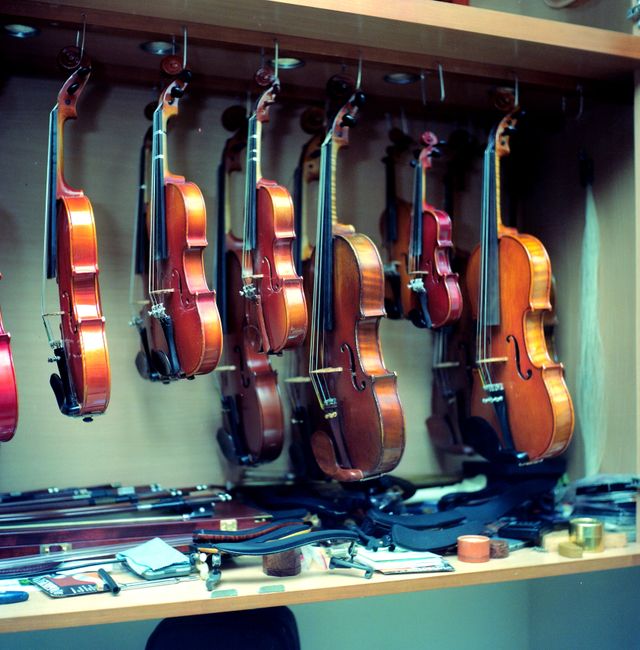
Introduction:
Start Your Musical Journey with the Right Violin
Buying your first violin is an exciting milestone, but it can also feel surprisingly complicated. A beginner may encounter different violin sizes, tone woods, fittings, bows, strings, cases, price ranges, and brand options before understanding what actually matters. This is why a reliable beginner violin buying guide is essential for anyone who wants to make a confident and practical purchase. The right first instrument can support better posture, improve comfort, encourage regular practice, and make the early stages of learning much more enjoyable.
Many new players assume that every violin looks and performs in roughly the same way. In reality, significant differences exist between poorly assembled instruments and well-prepared beginner violins. A violin may look attractive but still have an uncomfortable setup, weak projection, unstable tuning, poorly fitted pegs, excessive string height, or an unsuitable bow. These problems can make basic techniques harder to learn. For a beginner who is still developing bow control, finger placement, rhythm, and intonation, an instrument should support progress rather than create unnecessary obstacles.
A useful beginner violin buying guide should therefore focus on more than appearance or price. Size is one of the first considerations because a violin that is too large can create tension in the left hand, shoulder, neck, and arm. Build quality also matters because the bridge, fingerboard, pegs, soundpost, strings, and tailpiece all influence playability. In addition, beginners need to think carefully about whether to buy online, purchase from a specialist violin shop, choose a complete outfit, or ask a teacher for guidance before making a final decision.
Budget is another important factor. The cheapest violin is not always the most economical choice if it requires immediate repairs, replacement strings, bridge adjustments, or new fittings. At the same time, a beginner does not necessarily need an expensive professional instrument. The goal is to find a violin that offers reasonable construction, stable tuning, comfortable playability, and a tone that encourages continued practice.
This beginner violin buying guide explains the major factors that deserve attention before purchasing a first violin. From selecting the correct size and examining materials to understanding setup, accessories, pricing, and common mistakes, the following sections will help new players make a more informed decision and begin learning with greater confidence.
Choose the Correct Violin Size Before Buying
One of the most important steps in any beginner violin buying guide is selecting the correct instrument size. Violins are available in several fractional sizes, including 1/16, 1/10, 1/8, 1/4, 1/2, 3/4, and full-size 4/4 models. Most adults use a 4/4 violin, while children often need a smaller instrument based on their age, arm length, hand size, and physical development.
A violin that is too large may cause the student to stretch excessively. This can lead to poor posture, tension, difficulty reaching notes, and inefficient technique. A violin that is too small may also limit comfort and control.
When possible, beginners should:
- Measure arm length carefully.
- Ask a violin teacher for sizing advice.
- Test the instrument before purchasing.
- Avoid choosing a larger size simply because a child may “grow into it.”
- Recheck sizing as young students develop.
Correct sizing creates a stronger foundation for comfortable learning.
Understand the Importance of Violin Materials
Materials can influence tone, durability, appearance, and overall performance. Traditional violins commonly use spruce for the top and maple for the back, ribs, and neck. Ebony is frequently preferred for the fingerboard because it is dense and resistant to wear.
A practical beginner violin buying guide should encourage buyers to look beyond decorative finishes. An instrument with an impressive glossy appearance is not automatically a better violin. Construction quality, wood preparation, fitting accuracy, and setup are more important than surface decoration.
Beginners should examine whether the violin has:
- A properly shaped bridge
- Secure and functional pegs
- A smooth fingerboard
- Stable fittings
- Reasonable string quality
- Clean construction
- No obvious cracks or structural damage
Well-selected materials combined with careful workmanship can improve reliability and playing comfort.
Pay Close Attention to the Violin Setup
Setup is one of the most overlooked factors when purchasing a first instrument. Even a reasonably constructed violin can be difficult to play if it has been poorly prepared.
The bridge should be correctly positioned and properly fitted to the top of the violin. The strings should sit at a manageable height above the fingerboard. The pegs should turn smoothly while holding their position. The soundpost must also be appropriately placed inside the instrument.
A strong beginner violin buying guide emphasizes setup because beginners may not recognize these technical issues immediately. They may simply assume that difficulty playing or tuning is caused by their lack of experience.
Before buying, consider asking whether the instrument has been professionally inspected or adjusted. A well-set-up beginner violin can make early lessons far more productive.
Set a Realistic Budget for Your First Violin
Price is naturally a major consideration, but choosing solely according to the lowest cost can be a mistake. Extremely cheap violins may have poor bridges, unreliable pegs, low-quality bows, weak strings, or construction problems that require additional spending.
Instead of asking only, “What is the cheapest violin available?” ask:
- Is the instrument playable?
- Does it stay in tune reasonably well?
- Are the pegs functional?
- Is the bridge correctly fitted?
- Is the bow usable?
- Does the package include essential accessories?
- Is professional adjustment available?
The best value is usually an instrument that balances affordability with dependable playability.
Decide Between a Violin and a Complete Outfit
Beginners often encounter the term “violin outfit.” A complete outfit generally includes the violin, bow, and case, although exact contents vary between sellers.
For many first-time buyers, an outfit can be convenient because it provides several essentials in one purchase. However, buyers should still evaluate each component individually. A reasonable violin paired with a poor-quality bow may reduce the overall value of the package.
A useful beginner package may include:
- Violin
- Bow
- Protective case
- Rosin
- Shoulder rest or suitable alternative
- Spare strings, depending on the package
Check exactly what is included before comparing prices.
Examine the Bow as Carefully as the Violin
The bow plays a central role in sound production. Beginners sometimes focus entirely on the violin and treat the bow as an insignificant accessory. However, an excessively heavy, warped, poorly balanced, or badly haired bow can make basic bowing techniques more difficult.
When following a beginner violin buying guide, check whether the bow feels manageable in the hand and whether its mechanism works correctly. The hair should tighten and loosen appropriately, and the stick should not show obvious damage.
A suitable beginner bow supports the development of straight bowing, controlled strokes, dynamic variation, and consistent tone production.
Consider Tuning Stability and Peg Function
New violinists already face the challenge of learning pitch and intonation. Unstable tuning can make that process unnecessarily frustrating. Before purchasing, check whether the pegs turn smoothly and hold securely.
Many beginner instruments also use fine tuners, which can make small pitch adjustments easier. Four fine tuners are often convenient for new students, particularly during the early learning stage.
Reliable tuning hardware saves time and helps beginners focus more effectively on practice.
Think Carefully Before Buying a Used Violin
A used violin can offer good value, but condition matters. Some older instruments are excellent purchases, while others may require repairs that exceed the original cost.
Inspect a used violin for:
- Open seams
- Cracks
- Warped bridges
- Damaged pegs
- Fingerboard problems
- Neck issues
- Missing fittings
- Poor-quality repairs
If possible, ask a teacher, experienced player, luthier, or violin specialist to examine the instrument before purchase. Never assume that an old violin is automatically valuable because of its age.
Avoid Common Beginner Violin Buying Mistakes
A dependable beginner violin buying guide should also identify common purchasing errors. New players frequently make decisions based on appearance, extremely low prices, or incomplete product descriptions.
Common mistakes include:
- Buying the wrong violin size
- Ignoring setup quality
- Choosing only by appearance
- Assuming every included bow is suitable
- Forgetting essential accessories
- Purchasing without checking return policies
- Expecting a professional-level violin at an unrealistic price
- Buying a used instrument without inspection
Avoiding these mistakes can reduce unnecessary expenses and improve the first learning experience.
Compare Sellers, Support, and Product Information
The seller can be almost as important as the instrument. Beginners benefit from clear product descriptions, transparent specifications, sizing guidance, responsive communication, and reliable support.
Before purchasing, compare:
- Instrument specifications
- Included accessories
- Size options
- Setup information
- Return conditions
- Shipping protection
- Customer assistance
- Replacement or upgrade possibilities
A trustworthy source should help buyers understand what they are purchasing rather than relying only on attractive marketing language.
Frequently Asked Questions About Buying a Beginner Violin
1. What size violin should a beginner buy?
The correct size depends on the player's body measurements, particularly arm length and physical comfort. Most adults generally use a full-size 4/4 violin, while children may require fractional sizes. A teacher or violin specialist can help determine the most suitable option.
2. How much should I spend on my first violin?
There is no single ideal amount because prices vary according to materials, workmanship, setup, accessories, and seller support. Beginners should focus on overall value and playability rather than automatically selecting the cheapest available instrument.
3. Is it better to buy a violin online or from a local shop?
Both options can work. Local shops may offer hands-on testing and direct assistance, while online sources can provide broader selection and convenient comparison. When buying online, carefully review sizing details, specifications, support options, and return conditions.
4. Should a beginner buy a new or used violin?
Either can be suitable. A new violin may provide greater predictability, while a used violin can sometimes offer excellent value. However, used instruments should be checked carefully for cracks, open seams, setup problems, and costly repair needs.
5. What accessories does a beginner violinist need?
Most beginners need a bow, case, rosin, and appropriate shoulder support. A tuner or tuning app, music stand, cleaning cloth, and spare strings can also be useful. Always check what comes with the violin before purchasing additional accessories.
Conclusion: Make Your First Violin Purchase with Confidence
Choosing a first violin is an important decision because the instrument can influence comfort, motivation, practice quality, and early technical development. A thoughtful beginner violin buying guide helps new players move beyond appearance and price by focusing on the factors that genuinely affect the learning experience. Correct sizing, suitable materials, proper setup, dependable tuning, a functional bow, and essential accessories all deserve careful consideration.
Beginners should compare instruments patiently and avoid making a decision based solely on the lowest price. An inexpensive violin that constantly slips out of tune or requires immediate repairs may become more costly over time. Similarly, purchasing the wrong size can create unnecessary physical tension and make fundamental techniques harder to develop.
The best first violin is not necessarily the most expensive instrument. It is one that fits the player, functions reliably, supports regular practice, and offers room for musical development. By following this beginner violin buying guide, students and families can make a more informed choice and begin their musical journey with an instrument that encourages confidence, consistency, and long-term enjoyment.
Find the Right Violin Resources and Support with Violin Network
Choosing your first instrument becomes easier when you have access to relevant violin-focused information, connections, and resources. Whether you are a new student researching your first purchase, a parent trying to understand violin sizes, a player exploring better options, or a violin professional looking to connect with the wider string community, Violin Network can be a valuable destination for your journey.
Visit https://violinnetwork.com/ to explore a dedicated platform centered around the violin world. Instead of making a rushed decision based only on price or appearance, use the principles in this beginner violin buying guide to understand what matters: proper sizing, playable setup, suitable construction, reliable accessories, and informed comparison.
A successful violin journey begins with better information and meaningful connections. Violin Network brings violin enthusiasts, learners, musicians, makers, teachers, and other members of the string community closer to a specialized environment where violin-related interests can grow.
If you are serious about choosing wisely, learning more, and becoming more connected to the violin community, now is the time to take the next step. Explore Violin Network, discover relevant opportunities, and strengthen your musical journey with a platform created around the world of violins.
Start exploring today and use this beginner violin buying guide as your foundation for a more confident first purchase. Visit Violin Network and take your next step toward a rewarding violin experience.
I can also create a more commercial version, a stronger E-E-A-T version, or a version with approximately 1%–1.5% keyword density.
Comments (0)
🔒 Please log in to comment
Please log in to comment💭 No comments yet. Be the first to comment!