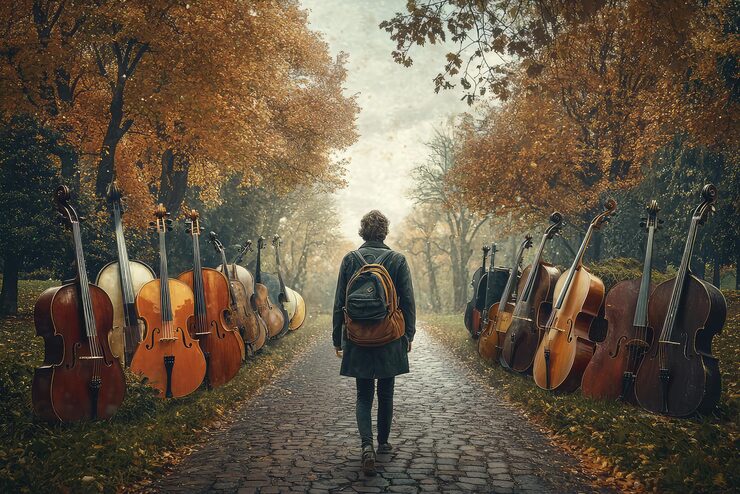
Violin around the World: 7 Cultural Styles That Will Change How You Play
The violin is one of the few instruments that truly belongs to the entire world. From candlelit European concert halls to dusty village celebrations, from intimate jazz clubs to sacred temple performances, the violin adapts, transforms, and speaks in countless dialects. Though its modern form emerged in 16th-century Italy, the instrument quickly traveled across continents, weaving itself into local traditions and reshaping musical identities along the way.
Today, violinists often train within a single tradition—most commonly Western classical music. Scales, études, and concertos form the backbone of disciplined practice. But beyond this familiar framework lies a breathtaking spectrum of cultural styles that can dramatically expand your technique, deepen your expression, and reshape your musical instincts.
When you explore global violin traditions, you don’t just learn new songs. You learn new rhythmic languages. You discover alternative bow grips, microtonal phrasing, improvisation frameworks, and emotional storytelling methods that challenge everything you thought you knew about tone production and articulation. Your ear sharpens. Your timing evolves. Your sense of musical freedom expands.
Within the Violin Network community, cross-style exploration is more than curiosity—it is growth. By stepping into unfamiliar musical cultures, you stretch your technical flexibility and unlock creative confidence. Let’s journey through seven powerful violin traditions that can permanently transform how you play.
Irish Fiddle: Rhythm in Motion
The Irish fiddle tradition is inseparable from dance. Unlike classical phrasing that often emphasizes long lyrical arcs, Irish fiddle playing thrives on rhythmic drive and ornamentation.
Reels, jigs, and hornpipes demand precision in bow direction and pulse. Cuts, rolls, and triplets add sparkle and motion. Instead of vibrato-heavy sustain, Irish players often use crisp articulation and subtle inflections.
How it changes your playing:
- Improves rhythmic accuracy
- Strengthens bow control at fast tempos
- Develops ornamentation technique
- Encourages playing by ear
After immersing yourself in Irish fiddle, you may find your classical allegros cleaner and your rhythmic passages more energized.
Indian Classical Violin: Microtones and Meditation
In Indian classical music, especially the Carnatic tradition, the violin becomes a vocal instrument. Introduced into South Indian music in the 18th century, it adapted beautifully to the intricate raga system.
Players often sit cross-legged, holding the violin differently to allow fluid slides known as gamakas. Instead of fixed equal-tempered pitches, Indian music uses microtonal variations that give each raga its unique emotional color.
How it changes your playing:
- Refines pitch sensitivity
- Expands your understanding of microtones
- Enhances expressive slides and portamento
- Deepens improvisational awareness
Exploring ragas trains your ear beyond Western scales and encourages a more intuitive relationship with melody.
Gypsy Jazz: Fire and Freedom
Gypsy jazz, also known as jazz manouche, emerged in 1930s France, heavily influenced by guitarist Django Reinhardt. The violin plays a central melodic and improvisational role in this vibrant style.
Here, swing rhythm reigns. Notes are often slightly behind the beat, creating a relaxed yet electric groove. Improvisation is essential. Instead of strictly interpreting written music, you respond spontaneously to chord progressions.
How it changes your playing:
- Builds improvisational confidence
- Develops rhythmic flexibility
- Encourages expressive phrasing
- Strengthens harmonic understanding
Gypsy jazz pushes you to take risks and trust your instincts.
Argentine Tango: Drama in Every Bow Stroke
In Argentine tango, the violin is bold, dramatic, and emotionally intense. Sharp accents, sudden dynamic shifts, and percussive bow techniques create tension and passion.
Tango phrasing often involves exaggerated rubato and expressive slides. The violin does not merely play melody—it breathes with the dancers.
How it changes your playing:
- Expands dynamic control
- Encourages dramatic articulation
- Strengthens expressive timing
- Adds theatrical intensity
You may discover a new boldness in your sound after tango exploration.
American Bluegrass: Raw Energy and Speed
Bluegrass fiddle blends folk roots with lightning-fast runs and rhythmic chopping. It thrives in jam sessions where musicians trade solos and respond instantly.
Unlike classical restraint, bluegrass embraces grit and personality. Slides, double stops, and rhythmic bow chops create a driving, percussive feel.
How it changes your playing:
- Increases speed and agility
- Improves double-stop control
- Builds ensemble listening skills
- Encourages confident stage presence
Bluegrass removes fear and replaces it with fearless musical conversation.
Eastern European Folk: Ornament and Emotion
Eastern European folk traditions are rich with asymmetrical rhythms and emotional intensity. Melodies often move between melancholy and ecstatic joy within a single phrase.
Fast ornamentation, unexpected rhythmic accents, and dramatic tempo shifts challenge coordination and musical reflexes.
How it changes your playing:
- Strengthens rhythmic adaptability
- Improves rapid ornament execution
- Enhances expressive contrast
- Broadens emotional storytelling
Middle Eastern Violin: Ornamented Expression
In Middle Eastern music, the violin often interprets maqam scales—modal systems that include quarter tones and intricate ornamentation.
Improvisation, known as taqsim, allows the violinist to explore emotional depth freely. Subtle pitch bends and decorative phrases shape each performance uniquely.
How it changes your playing:
- Develops microtonal control
- Encourages expressive improvisation
- Refines ornament clarity
- Enhances tonal nuance
Why Cross-Style Learning Transforms You
Each tradition challenges a different technical habit. Irish fiddle sharpens rhythm. Indian classical refines pitch. Gypsy jazz unlocks improvisation. Tango builds drama. Bluegrass enhances speed. Eastern European music tests rhythmic reflexes. Middle Eastern traditions deepen modal awareness.
When you explore these styles, your violin playing becomes more flexible, more expressive, and more alive.
Within the Violin Network community, this kind of exploration isn’t about abandoning classical training—it’s about expanding it. Sharing recordings, learning global tunes, participating in stylistic challenges, and collaborating across traditions allows you to grow beyond borders.
The violin has traveled the world for centuries. Now it’s your turn.
Step outside your comfort zone. Learn a reel. Try a raga. Improvise over swing chords. Let global traditions reshape your technique and awaken new musical instincts.
Your violin has more voices than you think.
Expand Your Sound. Elevate Your Artistry. Join the Movement.
Your violin journey deserves more than isolation, frustration, and second-guessing. It deserves inspiration, guidance, and a community that understands both the beauty and the struggle of becoming a better musician. That is exactly what you’ll find at Violin Network.
Whether you’re refining your technique, exploring new cultural styles, overcoming performance anxiety, or reigniting your motivation, this is your space to grow without limits. Violin Network isn’t just a platform—it’s a global circle of passionate violinists who believe in progress through connection, shared learning, and fearless exploration.
Imagine being surrounded by players who challenge you, support you, and celebrate your breakthroughs. Imagine discovering new styles, exchanging ideas, participating in creative challenges, and gaining insights that transform how you practice and perform. This is where disciplined musicianship meets artistic freedom.
Your next level is waiting. Your confidence is waiting. Your most expressive playing is waiting.
Don’t stay stuck in the same routine. Step into a vibrant international community that fuels your growth and reminds you why you fell in love with the violin in the first place.
Visit https://violinnetwork.com/ today and become part of something bigger than practice—become part of a movement that transforms violinists into fearless, inspired artists.
🎻 Explore Global Violin Culture
Our directory spans 50+ countries — find violin professionals from every tradition.
Explore Directory →
评论 (0)
🔒 请登录后评论
请登录后评论💭 暂无评论. 成为第一个评论的人!