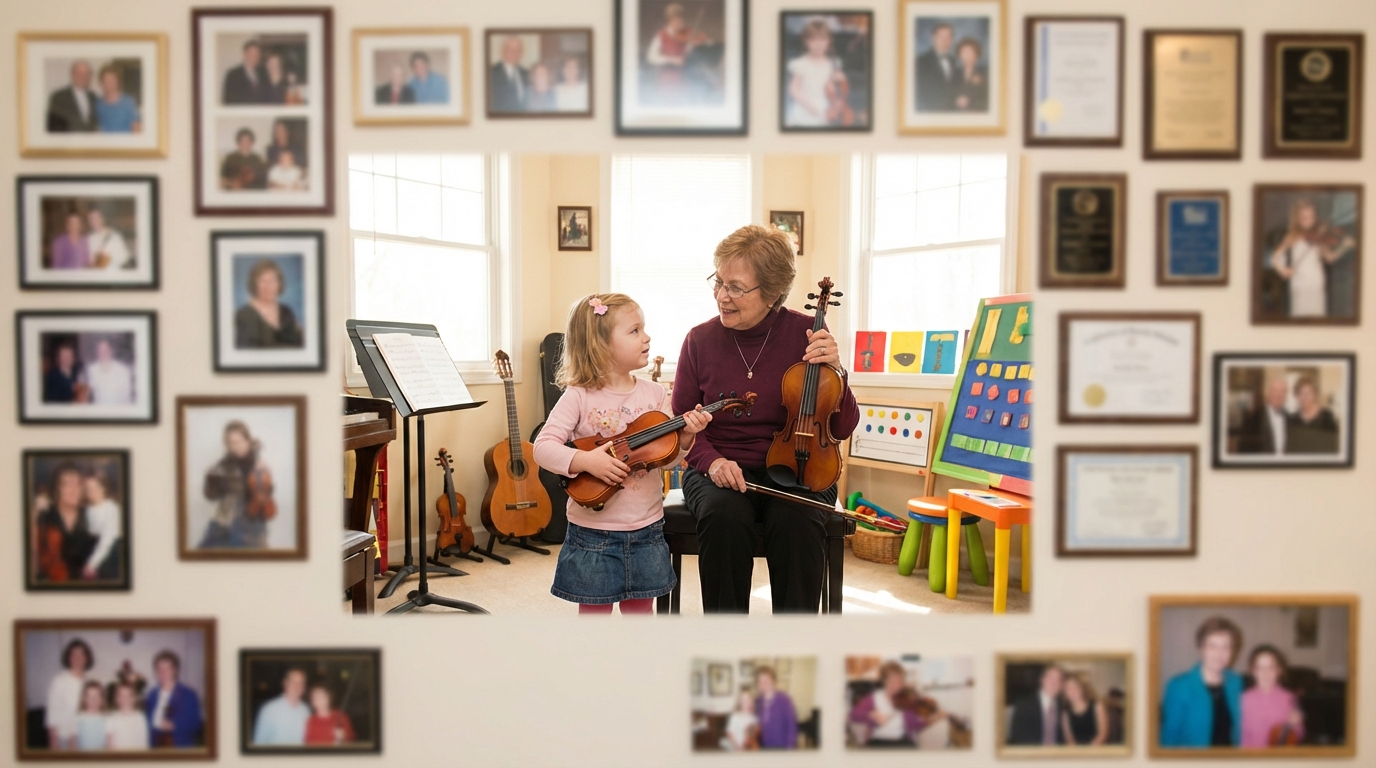

Teaching Young Beginners: Lessons from 15 Years
After 15 years teaching violin to students ages 4-18, I've learned that teaching young beginners requires a completely different approach than teaching advanced students.
The First Lesson
Goals for lesson one:
- Make it fun and exciting
- Hold the violin correctly (even if just for 30 seconds)
- Play an open string
- Leave wanting more
What NOT to do:
- Overwhelm with information
- Expect perfect technique
- Make it too serious
- Go too long (30 minutes maximum)
Age-Appropriate Expectations
Ages 4-6:
- 15-20 minute lessons
- Heavy use of games and imagery
- Focus on one element at a time
- Parents must be present
- Practice 10-15 minutes daily
Ages 7-9:
- 30-minute lessons
- Introduction to reading music
- More technical focus
- Building practice habits
- Practice 20-30 minutes daily
Ages 10+:
- 45-60 minute lessons
- Serious technique work
- Repertoire development
- Beginning to self-correct
- Practice 30-45+ minutes daily
Essential Teaching Techniques
1. The Power of Imagery
Instead of: "Keep your wrist straight" Say: "Make your arm like a slide at the playground"
2. Gamification
Turn everything into games:
- "How many perfect pizzicatos in a row?"
- "Can you play softer than a mouse?"
- "Let's see if you can hold the bow for the count of 10"
3. Small Victories
Celebrate every tiny achievement. Young students need constant positive reinforcement.
4. Parent Involvement
Parents are practice partners for young students. Teach them:
- How to help (without taking over)
- What to listen for
- When to encourage a break
- How to make practice fun
Common Challenges
Short Attention Span Solution: Switch activities every 5-7 minutes
Resistance to Practice Solution: Create sticker charts, make it a game, practice together
Physical Discomfort Solution: Use shoulder rests, frequent breaks, check violin size
Frustration with Progress Solution: Video progress, celebrate small wins, show them how far they've come
Building a Practice Routine
Help families establish:
- Same time every day
- Comfortable practice space
- Mix of review and new material
- End on a positive note
- Parent appreciation and encouragement
Red Flags
Watch for:
- Tension (shoulders, wrist, jaw)
- Practicing mistakes without correction
- Boredom or burnout
- Incorrect technique becoming habit
- Family conflict around practice
My Teaching Philosophy
- Make it musical from day one: Even Twinkle should have dynamics and expression
- Technique serves music: Don't drill technique divorced from musical context
- Every student is different: Adapt your approach to each personality
- Parents are partners: Work with them, not around them
- Keep it fun: If they hate it, they'll quit. Keep the joy in music-making.
When Students Want to Quit
It happens to most students around ages 8-10. Strategies:
- Identify the real reason
- Adjust expectations or approach
- Try different repertoire
- Take a short break
- Remember: it's okay if music isn't their path
The Reward
Teaching beginners is challenging, but watching a struggling 5-year-old become a confident 15-year-old musician is one of life's great privileges.
Every master violinist started as a squeaky beginner. Your patience, creativity, and encouragement might be nurturing the next great musician!
Fellow teachers: What are your favorite beginner teaching strategies? Share in the comments!
🎻 List Your Teaching Practice
Are you a violin teacher? Get discovered by students and parents in your area.
Commentaires (0)
🔒 Veuillez vous connecter pour commenter
Veuillez vous connecter pour commenter💭 Pas encore de commentaires. Soyez le premier à commenter !