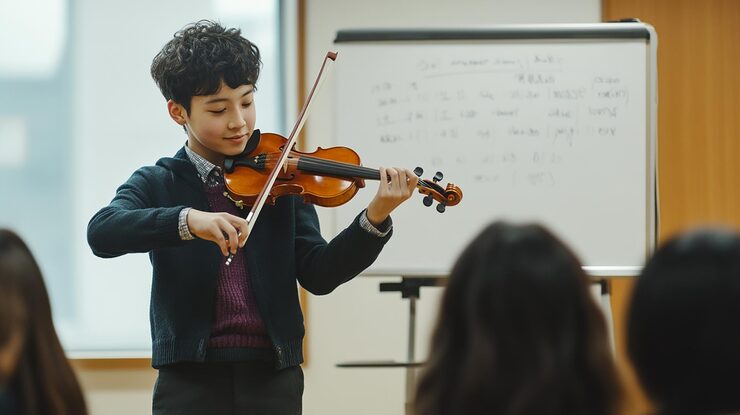
An Informative Introduction to Technology in Modern Violin Lessons
The art of violin playing has been passed down for centuries through master–apprentice traditions, handwritten sheet music, and in-person instruction. From the days of Antonio Vivaldi to the legendary virtuosity of Niccolò Paganini, mastery of the violin depended almost entirely on physical presence, repetition, and disciplined listening. While those foundations remain unchanged, the learning landscape has evolved dramatically. Today’s violin lessons are no longer limited to weekly sessions in a studio. Technology has opened new dimensions for students and teachers alike, creating opportunities for deeper practice, instant feedback, structured progress tracking, and global access to expertise.
Modern technology does not replace traditional violin training; rather, it enhances and supports it. Digital tools help students tune accurately, practice rhythm consistently, analyze posture visually, and access thousands of scores instantly. Online platforms allow learners in small towns to study with expert instructors across the world. Recording apps provide objective feedback that sharpens self-awareness. Even artificial intelligence is beginning to assist in pitch correction and tone evaluation.
For students balancing school, work, or other commitments, technology provides flexibility and continuity. For teachers, it offers new methods to monitor progress, share resources, and personalize instruction. Whether a beginner struggling with intonation or an advanced player refining vibrato, the right technological tools can significantly accelerate improvement.
Understanding how to use technology wisely is the key. When aligned with clear learning goals, apps, tools, and platforms become powerful companions in the journey of violin mastery.
Digital Tuners and Intonation Apps: Building a Reliable Ear
One of the first challenges in violin lessons is tuning. Because the violin has no frets, pitch accuracy depends entirely on ear training and muscle memory. Traditional tuning methods relied on tuning forks or pianos, but today’s students have access to precise digital tools.
Apps like TonalEnergy Tuner and Cleartune provide real-time visual feedback on pitch accuracy. These apps not only tune the open strings (G, D, A, E) but also help students see whether their finger placement is sharp or flat during practice.
This visual reinforcement accelerates ear training. Over time, students rely less on the screen and more on their internal sense of pitch. Technology becomes a bridge toward independent musicianship rather than a crutch.
Metronome Apps: Strengthening Rhythm and Timing
Rhythm is as important as pitch. Many violin students rush difficult passages or slow down unconsciously during challenging sections. Consistent tempo builds discipline and ensemble readiness.
Apps such as Pro Metronome and Soundbrenner offer customizable tempo settings, subdivisions, and even visual beat indicators. Some wearable metronomes vibrate instead of clicking, helping players internalize rhythm without distracting sound.
By practicing scales, études, and repertoire with a metronome, students develop steady timing. Technology ensures accountability — the beat does not bend to accommodate hesitation.
Recording Tools: Objective Self-Assessment
One of the most powerful technological tools is simple audio or video recording. Smartphones and tablets allow students to record lessons and practice sessions instantly.
When students listen to themselves, they hear details often missed while playing — scratchy tone, uneven bowing, inconsistent vibrato, or posture issues. This self-awareness fosters faster improvement.
Teachers frequently encourage students to review lesson recordings between sessions. Watching posture on video can correct shoulder tension or wrist alignment more effectively than verbal instruction alone.
Recording transforms subjective experience into objective evaluation, strengthening independent practice skills.
Online Learning Platforms: Expanding Access to Expertise
Online platforms have reshaped violin lessons globally. Through video conferencing tools like Zoom and Skype, students can connect with instructors regardless of location.
This is particularly valuable for learners in rural or underserved areas where specialized violin teachers may not be available. Advanced students can even study with international experts without relocating.
Online platforms also allow lessons to be recorded for review. Screen sharing enables teachers to annotate sheet music in real time, highlight bowings, and demonstrate fingerings clearly.
Technology thus democratizes violin education, making quality instruction more accessible than ever.
Digital Sheet Music and Practice Libraries
Carrying stacks of sheet music is no longer necessary. Digital platforms like IMSLP provide free access to thousands of classical scores. Students can instantly download études, concertos, and chamber music.
Apps like forScore allow annotation directly on tablets. Teachers can mark bowings, dynamics, and corrections digitally. This keeps all materials organized in one place.
Digital libraries also encourage exploration. A curious student can discover works by composers beyond the standard curriculum, broadening musical exposure and stylistic understanding.
Practice Management and Goal Tracking Apps
Consistent practice is essential for violin mastery. However, many students struggle with discipline or structured practice.
Practice management apps help students set goals, track time spent on scales or repertoire, and monitor weekly progress. By visualizing effort and improvement, motivation increases.
Teachers can review practice logs and adjust lesson plans accordingly. Technology adds structure to what can otherwise become unfocused repetition.
Backing Tracks and Accompaniment Software
Practicing solo repertoire without accompaniment can feel isolating. Backing tracks provide harmonic context and improve ensemble skills.
Apps and online resources offer piano accompaniments at adjustable tempos. Students can practice concertos or sonatas with full musical support, improving timing and musicality.
This simulation of performance conditions builds confidence before recitals or examinations.
Posture and Technique Analysis Tools
Advanced apps and video tools now assist with posture correction. By reviewing slow-motion footage, students can analyze bow angles, elbow height, and wrist flexibility.
Some AI-driven platforms even offer pitch accuracy graphs and tone analysis. While still evolving, these tools provide additional layers of technical refinement.
When guided by a knowledgeable teacher, such analysis supports healthy technique and injury prevention.
Balancing Technology with Traditional Discipline
While technology enhances violin lessons, it must be used thoughtfully. Overreliance on visual pitch indicators may weaken listening skills. Constant screen exposure can distract from deep musical focus.
The key is integration, not replacement. Technology supports learning goals — it does not substitute disciplined practice, attentive listening, and artistic interpretation.
A student practicing scales slowly with careful tone production gains more than one chasing digital scores. Tools amplify progress when grounded in solid fundamentals.
Preparing Violinists for a Digital Musical World
Today’s violinists perform, collaborate, and promote themselves online. Recording skills, digital portfolio creation, and remote collaboration are increasingly essential.
Technology in violin lessons not only improves technique but also prepares students for modern musical careers. From audition submissions to virtual ensembles, digital fluency expands opportunities.
Embracing Innovation While Honoring Tradition
The violin remains one of the most expressive and demanding instruments in the world. Its wooden body and horsehair bow connect players to centuries of musical heritage. Yet, embracing innovation does not diminish tradition — it strengthens it.
When thoughtfully integrated, apps, tools, and platforms enhance ear training, rhythm, posture, access to instruction, and practice efficiency. They empower students to learn smarter, practice more effectively, and connect globally.
Technology in violin lessons is not about replacing the teacher or the timeless discipline of practice. It is about providing additional support systems that align with clear musical goals.
In the hands of a dedicated student and a skilled teacher, technology becomes a powerful ally — accelerating growth, increasing motivation, and deepening musical understanding.
The future of violin education lies not in choosing between tradition and innovation, but in harmonizing both.
Elevate Your Violin Journey with Purpose, Passion, and the Right Support
Every violinist reaches a moment of truth — the point where talent alone is no longer enough. Progress demands guidance. Confidence requires community. Mastery calls for structure, discipline, and inspiration. If you are serious about growing as a violinist — whether you are a beginner building fundamentals or an advanced player refining artistry — the next step matters.
Violin growth is not accidental. It is intentional.
At Violin Network, you are not just accessing lessons — you are stepping into a focused environment designed to accelerate improvement, strengthen technique, and deepen musical expression. This is where discipline meets clarity. Where frustration turns into progress. Where isolated practice becomes purposeful development.
Too many violinists struggle alone — confused about technique, overwhelmed by repertoire, unsure how to structure practice, and battling self-doubt. Without the right direction, months — even years — can pass with minimal improvement. The difference between stagnation and breakthrough is expert guidance and a supportive learning ecosystem.
That is exactly what you will find at:
This platform is built for violinists who refuse to settle for average. You gain access to structured learning paths, practical insights, and a network that understands the real challenges of mastering this demanding instrument. Whether your goal is stronger intonation, refined bow control, confident performance, or long-term artistic growth, Violin Network equips you with tools that align with serious progress.
Imagine practicing with clarity instead of confusion.
Imagine performing with confidence instead of fear.
Imagine finally understanding how to improve — not just being told to “practice more.”
Your violin journey deserves more than random tutorials and scattered advice. It deserves direction. It deserves accountability. It deserves a community that pushes you forward.
If you are ready to:
• Break through frustrating plateaus
• Strengthen technique with purpose
• Develop musical maturity and confidence
• Practice smarter — not just longer
• Surround yourself with serious violin learners
Then this is your moment.
Do not let another season pass wondering why progress feels slow. Do not let doubt silence your potential. The violin rewards commitment — and the right environment multiplies results.
Take control of your growth today.
Visit 👉 https://violinnetwork.com/
Explore the resources. Connect with the network. Commit to your next level.
Your sound can be stronger.
Your confidence can be higher.
Your artistry can be deeper.
The only question is — is you ready to step forward?
Join Violin Network now and transform the way you learn, practice, and perform.
🎻 Find a Tech-Savvy Teacher
Many teachers in our directory offer online lessons with modern tools and apps.
Find Online Teachers →
Commentaires (0)
🔒 Veuillez vous connecter pour commenter
Veuillez vous connecter pour commenter💭 Pas encore de commentaires. Soyez le premier à commenter !