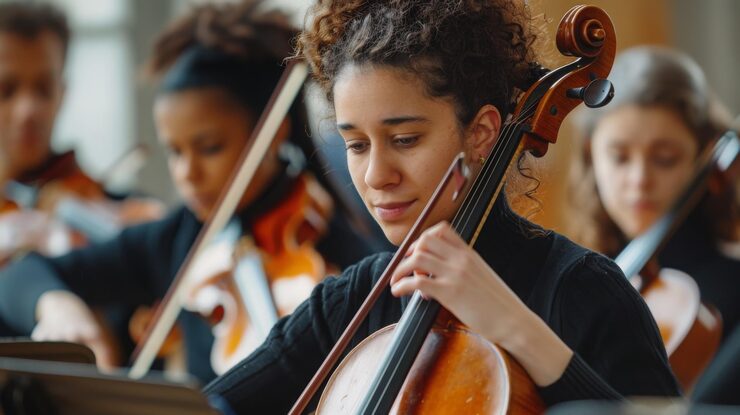
An Inspiring Introduction to the Power of Collective Music-Making
Playing the violin is often imagined as a solitary journey — a single musician standing under a spotlight, pouring emotion into every note. While solo performance is deeply rewarding, there is an entirely different and transformative experience that comes from playing violin in ensembles and orchestra groups. When multiple violinists sit side by side, guided by a conductor, blending their sound into one unified voice, something extraordinary happens. Music becomes more than an individual expression; it becomes a shared language of connection, discipline, and collective creativity.
Ensemble and orchestra participation allows violinists to step beyond personal technique and explore musical collaboration at its finest. In a group setting, you learn not only to play your instrument well but also to listen carefully, adapt quickly, and respond sensitively to others. The violin, known for its expressive range and lyrical quality, plays a vital role in orchestral music. From delicate harmonies to powerful climaxes, violinists often carry the emotional core of a performance.
Playing in groups also introduces musicians to a wide repertoire of classical, contemporary, and cultural compositions. Whether performing works by legendary composers like Ludwig van Beethoven, Wolfgang Amadeus Mozart, or Pyotr Ilyich Tchaikovsky, violinists experience the richness of layered harmonies and dynamic contrasts that only orchestral settings can offer.
Beyond the music itself, playing in ensembles nurtures confidence, emotional intelligence, leadership skills, and lifelong friendships. It transforms practice from a routine into a shared mission. For violinists at any level — beginner, intermediate, or advanced — joining an ensemble or orchestra is not just a musical step forward; it is a personal and artistic evolution.
Strengthening Musical Skills Through Collaboration
One of the greatest benefits of playing violin in ensembles is the rapid improvement in musical skills. When practicing alone, a violinist may focus primarily on technique — scales, bow control, finger placement, and tone quality. However, in an orchestra, these skills are refined under real-time musical demands.
In a group, timing becomes crucial. You must match your rhythm perfectly with fellow violinists and other instrument sections. Even slight deviations can disrupt the overall sound. This constant synchronization strengthens internal rhythm and musical awareness.
Intonation also improves significantly. Playing alongside others forces you to tune your notes carefully so that harmonies blend seamlessly. Your ear becomes sharper, and you develop a deeper understanding of pitch relationships.
Additionally, ensemble playing enhances dynamic control. You learn when to play softly to support another section and when to project boldly. This sensitivity to musical balance cannot be fully developed in solo practice alone.
Developing Deep Listening Skills
Listening is one of the most important yet underrated skills for a violinist. In an orchestra, listening goes beyond hearing your own instrument. You must remain aware of cellos, violas, woodwinds, brass, and percussion.
For example, when following a conductor during a performance of Beethoven’s symphonies, violinists must respond instantly to tempo changes and expressive cues. The violin section often carries melodic themes while coordinating with harmony and rhythm from other sections.
This heightened awareness strengthens concentration and mental agility. Over time, musicians become more attentive not only in music but also in daily life. Ensemble training sharpens the ability to process multiple layers of information simultaneously.
Building Confidence Through Shared Performance
Stage fright is common among violinists, especially during solo recitals. Playing in an ensemble reduces performance anxiety because responsibility is shared. Instead of standing alone, you are part of a collective sound.
The supportive presence of fellow musicians builds courage. Mistakes become learning experiences rather than overwhelming setbacks. As confidence grows within the group setting, many violinists eventually feel more prepared to take on solo roles as well.
Public performances with orchestras also provide valuable exposure. The thrill of performing complex compositions in harmony with dozens of musicians creates a profound sense of achievement.
Fostering Teamwork and Discipline
Orchestras operate on discipline, cooperation, and respect. Every musician must arrive prepared, practice their parts, and follow rehearsal schedules. This environment instills professionalism and responsibility.
Teamwork becomes second nature. If one section dominates unnecessarily, the balance is disturbed. If one musician fails to count rests properly, timing can collapse. Therefore, mutual respect and accountability are essential.
These lessons extend far beyond music. The discipline learned in orchestral settings translates into academic success, workplace efficiency, and leadership development.
Exposure to Diverse Repertoire and Styles
Playing violin in ensembles introduces musicians to a wide range of musical styles — classical symphonies, chamber works, film scores, folk arrangements, and contemporary compositions.
Performing works inspired by composers such as Mozart or Tchaikovsky expands musical vocabulary. Each era demands different techniques and emotional interpretations. Classical pieces require clarity and balance, Romantic works demand expressive depth, and modern compositions challenge rhythmic precision.
This diversity broadens artistic perspective and prevents musical stagnation. Instead of repeating the same solo pieces, violinists continually explore new creative landscapes.
Emotional and Social Growth
Music is deeply emotional, and sharing it amplifies its impact. Ensemble participation creates strong social bonds. Rehearsals become spaces of laughter, learning, and collective progress.
Young violinists especially benefit from the sense of belonging that orchestras provide. Being part of a musical community reduces isolation and builds friendships rooted in shared passion.
Emotionally, performing powerful symphonic works can be transformative. The swell of strings during a dramatic climax or the gentle harmony of a slow movement creates shared emotional experiences that are unforgettable.
Leadership Opportunities Within the Orchestra
Orchestras offer structured leadership roles such as section leaders or concertmasters. These positions allow experienced violinists to guide others, coordinate bowings, and communicate with the conductor.
Serving in leadership roles strengthens communication skills and confidence. It also deepens understanding of musical structure and interpretation.
Even without formal titles, experienced players naturally mentor younger members, creating a culture of growth and encouragement.
Enhancing Career Opportunities
For violinists considering professional careers, ensemble experience is essential. Most professional musicians perform in orchestras, chamber groups, or collaborative settings rather than exclusively as soloists.
Participation in youth orchestras, community ensembles, or professional symphonies strengthens resumes and audition readiness. It demonstrates reliability, teamwork, and advanced musicianship.
Moreover, networking within orchestras often leads to future collaborations, teaching opportunities, and performance invitations.
Cultivating Lifelong Musical Passion
Perhaps the most beautiful benefit of playing violin in ensembles is the lasting joy it brings. Solo practice can sometimes feel repetitive or isolating. In contrast, rehearsals filled with harmonies, crescendos, and shared applause keep motivation alive.
The collective energy of dozens of musicians playing as one creates a powerful sense of unity. Each rehearsal builds toward a shared goal — a successful performance. That shared purpose strengthens dedication and passion.
Over time, the orchestra becomes more than a musical group; it becomes a second family.
A Transformative Musical Journey
Playing violin in ensembles and orchestra groups is far more than an extracurricular activity. It is an immersive journey of growth, collaboration, and artistic discovery. It refines technical skills, sharpens listening abilities, nurtures emotional intelligence, and builds lifelong relationships.
From the disciplined structure of rehearsals to the exhilarating moment when the conductor lowers the baton after a triumphant finale, ensemble participation leaves a lasting imprint on every violinist.
Whether you are a beginner exploring your first group rehearsal or an advanced musician preparing for professional auditions, joining an ensemble can transform your musical path. The violin’s true voice often shines brightest not in isolation, but in harmony with others.
Elevate Your Violin Journey with the Right Community
Every violinist reaches a moment where practice alone is no longer enough. You want deeper insight, stronger motivation, better technique, and a supportive space that understands your musical struggles and ambitions. Growth does not happen in isolation — it happens in community, with guidance, clarity, and inspiration.
Whether you are navigating performance anxiety, refining your bow control, preparing for auditions, or searching for ensemble opportunities, the right support system can change everything. Imagine having access to resources designed specifically for violinists — practical advice, thoughtful guidance, structured learning, and a network that truly understands the artistry and discipline behind the instrument.
That is exactly why you should Visit 👉 https://violinnetwork.com/
At Violin Network, you are not just another learner. You become part of a focused musical environment built to strengthen your skills, expand your knowledge, and fuel your passion. From technique refinement to ensemble growth strategies, from mindset development to performance preparation — this is where serious violinists move forward with confidence.
Your progress deserves structure.
Your passion deserves direction.
Your talent deserves the right platform.
Do not let uncertainty slow your musical evolution. Take the next meaningful step toward mastery, connection, and artistic growth.
Visit 👉 https://violinnetwork.com/ today and become the violinist you are meant to be.
🎻 Find an Orchestra or Ensemble
Browse orchestras and ensembles in our directory to find playing opportunities near you.
Browse Orchestras →
Comentarios (0)
🔒 Por favor inicia sesión para comentar
Por favor inicia sesión para comentar💭 Aún no hay comentarios. ¡Sé el primero en comentar!