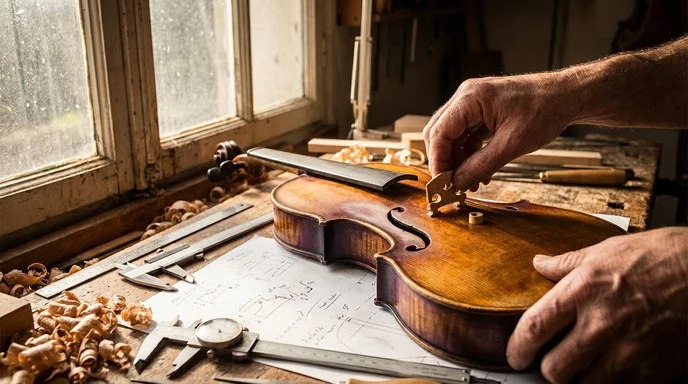
"So... you make lutes?" That's what most people guess when I tell them I'm a luthier. Close, but not quite — though that's actually where the word comes from.
I've spent 20 years in a workshop surrounded by wood shavings, varnish fumes, and the satisfying sound of a freshly carved scroll. Let me pull back the curtain on one of the world's oldest and most misunderstood crafts.
A luthier is a highly skilled craftsperson who builds, repairs, and maintains stringed instruments such as violins, violas, cellos, double basses, guitars, and other string instruments. If you are a violinist, guitarist, or any string instrument player, understanding what is a luthier is very important because these professionals play a crucial role in the sound, performance, and longevity of your instrument. The word “luthier” originally comes from the French word luth, meaning lute, but today it refers to makers of all types of string instruments.
If you're curious about the luthiers working near you, our Luthier Directory profiles hundreds of violin makers and repairers around the world — complete with contact details, specializations, and reviews from other musicians.
When musicians buy a new instrument, repair a damaged one, adjust the bridge, replace a soundpost, or improve tone quality, they often visit a luthier rather than a general music shop. That’s because a luthier has specialized knowledge of wood, acoustics, instrument structure, varnish, and setup techniques. Even a small adjustment by a skilled luthier can significantly improve the sound quality and playability of an instrument.
Understanding what is a luthier is especially important for violin students and professional musicians because string instruments are delicate and require expert care. Unlike mass-produced instruments, many violins and guitars are handmade or require precise adjustments, and only a trained luthier can properly handle these tasks without damaging the instrument.
Luthiers not only repair instruments but also build custom instruments from scratch. They carefully select tonewoods, shape the instrument body, apply varnish, and set up the instrument to produce the best possible sound. This process can take weeks or even months depending on the instrument.
In simple terms, a luthier is like a doctor, engineer, and artist for string instruments. Without luthiers, musicians would struggle to maintain their instruments, achieve good sound quality, or preserve valuable instruments for future generations.
What Does a Luthier Do?
To fully understand what is a luthier, it is important to know what they actually do. A luthier is responsible for building, repairing, restoring, and setting up string instruments. Their work includes fixing cracks, adjusting bridges, replacing strings, repairing bows, setting soundposts, and improving the overall sound quality of instruments like violins, guitars, violas, and cellos. Many musicians regularly visit a luthier for instrument maintenance because even small adjustments can greatly improve tone and playability.
Luthiers also perform instrument setup, which includes adjusting string height, bridge position, fingerboard, tuning pegs, and tailpiece. A proper setup makes an instrument easier to play and helps produce a better sound. Without proper setup, even an expensive instrument may not sound good.
Difference Between a Luthier and a Guitar Technician
When learning what is a luthier, people often confuse luthiers with guitar technicians. While both work with instruments, there is a difference. A guitar technician usually performs basic repairs like changing strings, adjusting truss rods, or fixing electronics. A luthier, on the other hand, has deeper knowledge of instrument construction, woodwork, acoustics, and instrument design.
A trained luthier can build an instrument from raw wood, repair major structural damage, restore antique instruments, and customize instruments for professional musicians. Their work requires years of training, practice, and craftsmanship.
Instruments Made and Repaired by a Luthier
Another important part of understanding what is a luthier is knowing the types of instruments they work with. Luthiers commonly work on:
- Violins
- Violas
- Cellos
- Double basses
- Acoustic guitars
- Classical guitars
- Mandolins
- Ukuleles
- Lutes
Some luthiers specialize only in violin family instruments, while others specialize in guitars. Violin luthiers are sometimes called violin makers or bow repair specialists.
Why Musicians Need a Luthier
Understanding what is a luthier is very important for musicians because string instruments are delicate and require regular maintenance. Over time, instruments may develop cracks, loose joints, warped bridges, or soundpost problems. If these issues are not fixed by a professional luthier, the instrument’s sound quality and structure can be damaged.
Professional musicians often have a trusted luthier who regularly maintains their instrument. A good luthier can improve tone quality, adjust the instrument for comfort, and help the instrument last for many years.
How to Become a Luthier
If someone is interested in woodworking, music, and craftsmanship, becoming a luthier can be a great career. Many luthiers learn through specialized schools, apprenticeships, or instrument-making courses. The training includes woodworking, acoustics, instrument design, varnishing, and repair techniques.
Learning what is a luthier also shows that this profession is both a technical skill and an art. Luthiers combine science, craftsmanship, and music knowledge to create and maintain beautiful instruments that musicians use every day.
Final Thoughts on What Is a Luthier
Understanding what is a luthier helps musicians and instrument owners appreciate the important role these skilled craftsmen play in the world of music. A luthier is not just a repair technician but a highly trained artisan who builds, restores, adjusts, and maintains string instruments to ensure they produce the best possible sound and remain in excellent condition for years. From crafting instruments by hand to performing delicate repairs and sound adjustments, luthiers combine woodworking skills, acoustic knowledge, and musical understanding.
Whether you are a beginner violin student, a professional musician, or a guitar enthusiast, a good luthier can greatly improve your instrument’s tone, playability, and lifespan. Regular visits to a luthier for maintenance and setup can make a significant difference in how an instrument sounds and feels. In simple terms, a luthier is an essential partner in every musician’s journey, helping instruments perform at their very best.
Find a Professional Luthier and Improve Your Instrument Today
If you have been wondering what is a luthier, now you know how important a skilled luthier is for your instrument’s sound, performance, and longevity. Whether you need a violin setup, bridge adjustment, crack repair, bow rehair, or expert advice before buying an instrument, working with a professional luthier can completely transform your playing experience. A properly adjusted instrument is easier to play, sounds better, and helps you progress faster as a musician.
At Violin Network, you can connect with experienced violin shops, professional luthiers, teachers, and quality instruments all in one place. Whether you are a beginner, student, parent, or professional musician, the platform helps you find trusted violin services and experts near you. Instead of struggling with instrument problems or poor sound quality, let an expert luthier help you get the best performance from your instrument.
Visit https://violinnetwork.com/ today to explore violin services, connect with professionals, and learn more about instruments, repairs, and lessons. If you truly want to understand what is a luthier and experience the difference a professional setup can make, this is the perfect place to start your journey.
🎻 Find a Luthier Near You
Our directory features verified luthiers, bow makers, and repair shops in over 50 countries. Read reviews, compare services, and contact them directly.
Browse Luthier Directory →
Comments (0)
🔒 Please log in to comment
Please log in to comment💭 No comments yet. Be the first to comment!